
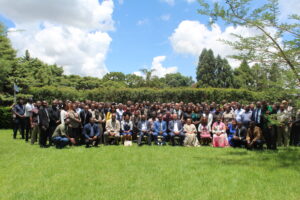
The Ministry of Lands, Agriculture, Fisheries, Water, and Rural Development, in collaboration with SADC-GMI, facilitated a two-day national stakeholder dialogue at the Golden Conifer Functions Venue from January 22nd to 23rd 2025.
This dialogue, which ran under the theme “Sustainable Groundwater Management Through Stakeholder Engagement,” brought together government representatives, water experts, NGOs, borehole drillers, and local communities to discuss the sustainable management of groundwater. The dialogue highlighted the increasing importance of groundwater resources, particularly in the face of climate variability.
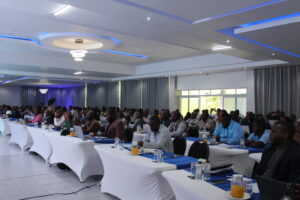
The event was officiated by the Deputy Minister of Lands, Agriculture, Fisheries, Water, and Rural Development, Hon Vangelis Haritatos. He highlighted that the El Nino drought from 2023 to 2024 was a wake-up call for more sustainable ways to safeguard the finite resource.
This platform brought together the key stakeholders in groundwater management, so he encouraged collaborative efforts to develop sustainable solutions.
“Let’s come together as government, water user organizations, academia, Civil Society Organisations, borehole drillers, and communities to forge a path towards resilience and sustainability in groundwater management,” he said.
He also warned illegal borehole drilling companies and unregistered borehole consumers, stressing the need for accountability and adherence to laws.
All groundwater sectors were represented, with borehole drillers providing essential insights into the practical aspects of groundwater extraction. Ministry representatives offered policy perspectives and outlined government initiatives, and the NGOs presented data from their research and steps being taken for sustainable groundwater management. The Sub-Catchment Councils shared localized experiences and management strategies.
The overarching theme underscored the necessity of collaborative efforts to ensure the sustainable management of groundwater. Discussions were centered on the impact of increased groundwater reliance due to factors like the recent El-Nino-induced drought. Other important issues included the need for integrated and equitable groundwater management models and regulatory reforms, including the ongoing review of the Water Act. The issue of over-abstraction and the impacts of climate change came out as the main challenges contributing to the problems related to groundwater management.
Furthermore, the importance of data collection and monitoring was discussed, mentioning the Rural WASH Information Management System (RWIMS) and the need for all boreholes to be included in a national database.
A key aspect of the dialogue was the active participation of the Upper Manyame Sub-Catchment Council (UMSCC). The UMSCC, serving as the secretariat of the National Focus Group, played a pivotal role in facilitating the event. Mrs. Constance Matsaira, the UMSCC Water Resources and Compliance Manager, gave a presentation on the purpose of the National Focus group as well as its mandate. Furthermore, Tendai Chipere, the UMSCC hydrologist, delivered a presentation detailing the current water state within the Upper Manyame River, providing valuable data on the region’s specific challenges.
The event served as a vital platform for knowledge sharing and collaboration, reinforcing the commitment to safeguarding Zimbabwe’s groundwater resources for present and future generations.